
Drought and clay series · October 2026
Cracks after a dry summer: why clay soil makes your house move
After every long, dry summer we get more calls about cracks in walls. Often the cause is not in the building but underneath it: in the clay.
Clay behaves like a sponge
Clay soil consists of very fine particles that hold water. When the ground dries out, it shrinks. When it gets wet again, it swells. In highly plastic clay that movement can reach about a tenth of the thickness of the layer that dries out. A foundation resting on such a layer moves with it.
How sensitive a clay is shows in its plasticity index: the higher the index, the greater the shrink-swell risk. A geotechnical lab determines it on a soil sample.
Why the damage is uneven
A house that settles evenly by a few millimetres is hardly noticeable. Damage occurs when one side settles more than the other: for example when the ground dries out along the edges but stays moist under the middle of the house, when part of the house has a basement, or when there are trees on one side only.
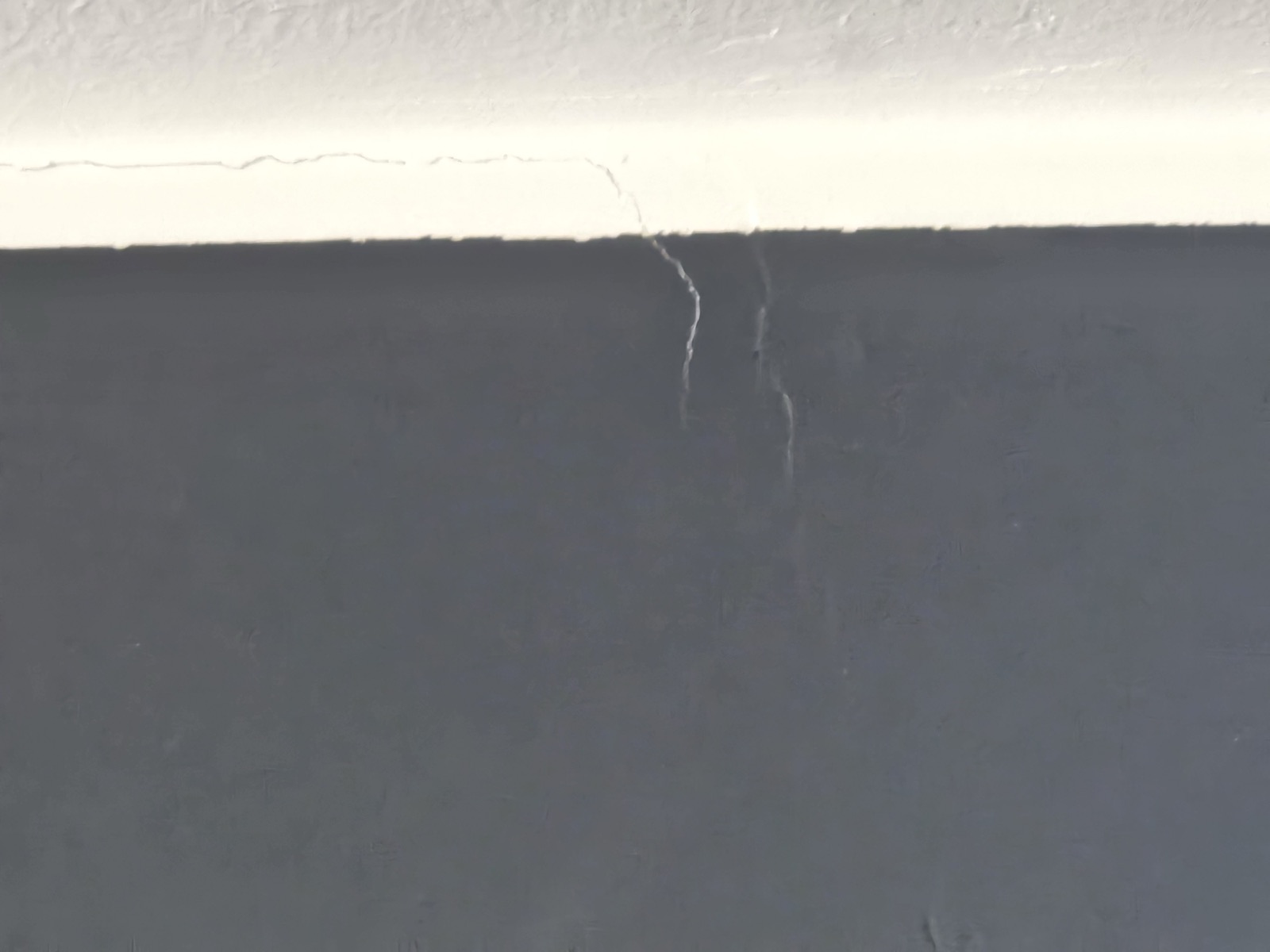
Typical signs are stepped cracks in brickwork, cracks above windows and doors, doors that stick and floors that start to slope. The cracks often widen in summer and partly close again in winter.
How deep does drought reach?
In a normal year the seasons affect the ground to about 1.5 m deep. Below that, the water content stays fairly constant. Houses with foundations at 60 to 80 cm, like many older homes, sit in the zone that moves. Under an open crawl space the ground can dry out even deeper.
Buildwise points out that with climate warming it is uncertain whether 1.5 m will still be enough in future. Longer, hotter dry spells dry the ground out deeper.
Where in Belgium?
The highest risk is in the old, highly plastic clays: Boom Clay (Boom Formation, around Antwerp, Boom, Mechelen and the Waasland) and Ypres Clay (Kortrijk Formation, across much of West and East Flanders and Flemish Brabant). Younger clays, loam and glauconitic sand can also shrink, but the risk is lower.
Whether there is clay under your house can be checked in the Flemish DOV database (theme "Plastische gronden") or on Geoportail for Wallonia. A CPT sounding on site gives certainty.
What can you do yourself?
- Monitor cracks with a crack gauge or a dated pencil line, for example every three months.
- Have the sewer and rainwater drains checked by camera: a leak wets the ground locally and can make things worse.
- Keep trees and large shrubs away from the façade (see our article on trees and clay).
- Do not wait until cracks are wider than a few millimetres: the earlier you act, the more limited the repair.
Sources: Buildwise (Belgian Building Research Institute), Cracking in buildings due to shrinking or swelling of plastic soils, WTCB-Dossiers 2021/5.10 and WTCB-Contact 2018/3; M. De Vos, Special problems when building on Tertiary clay, TI-KVIV study day 2004; BRE Digests 240–242, 298 and 412. This article summarises those sources in our own words and does not replace advice from an engineer.